

When it comes to writing advice, chapter one gets all the love, and the other ninety scenes (as well as the writers of those scenes!) are on their own. There’s no agony aunt column for how to begin scene fifteen or twenty-seven. You sit down and there it is: a blank page.
But, every scene opening, no matter where it sits in the book, has exactly two jobs:
To orient: The reader needs to know, fast, who’s in the room and what’s at stake between them, and what the emotional tone is.
To pull: The reader needs a reason to keep going. Something is off, something is coming, something has shifted since the last scene. A secret confession. A small forward lean.
Every scene opening you’ve ever read that worked does both of these in the first paragraph or two. Take this example from chapter twenty-seven of Six of Crows:
Where the hell is Kaz? Jesper bounced from foot to foot in front of the incinerator, the dim clang of alarm bells filling his ears, rattling his thoughts. Yellow Protocol? Red Protocol? He couldn’t remember which was which. Their whole plan had been built around never hearing the sound of an alarm.
We know exactly where we are. We know who’s there (and who is supposed to be there, but isn’t!). We’re practically vibrating with Jesper’s anxiety. And we’re pulled in by the fact that things are not going according to plan.
What you’re actually orienting
The part I’ve been thinking about most lately is the orientation bit, and it comes from a slightly weird place.
A couple of months ago I signed up for an improv class, because I wanted to write scenes with better comedic timing. What I didn’t expect was that almost every lesson in that class has turned out to be about how to create a scene between two people, and how to draw the audience in. Making people actually laugh is the bit that you do unconsciously through absurdity or juxtaposition.
The first thing they hammer into you is that a scene is not the room. It’s not the activity. It’s not even what the scene is “about.” A scene is the two people in it, who they are to each other, and how they feel about each other right now. Everything else is set dressing. Relationship and emotion. That’s the start of an improv scene.
That sounds obvious until you’re on stage and realising five minutes in that you’ve set up an entire coffee shop scene and served three customers, but the audience has no idea who these two people are and if they love or hate each other, and the scene reaches this uncomfortable lull. You don’t know what to do next because there was never a relationship for anything to happen to.
The fix is simple but (for me at least) so hard to do in the moment. Before you do anything else, establish three things:
Who these people are to each other: Brothers who haven’t spoken in a year. The teacher and the parent who’s about to complain. The ex and the new girlfriend, meeting on purpose. We’re coached to name our scene partner, and the relationship as early as possible.
How they feel about each other right now: Resentment, longing, suspicion, embarrassment, the careful politeness of two people who just made up after a fight. The emotion is what makes the relationship matter.
A point of view: Having a point of view (ie: a thing you love/hate) helps to make the character unique and believable. It also gives you something to play with, because you can keep bringing your point of view back to focus.
The point of view one is interesting because it reminds me of a piece of writing advice I once read from Phoebe Waller-Bridge. She said that she always tries to give a character three things that they are juggling at any one time: they’re trying to order a sandwich, the deli is unbearably hot, and they’re trying very hard not to let on that they plan to rob the bank down the street in twenty minutes.
What a fun scene to write!
An openings menu
Once you’re holding all that in your head, the objective gets a lot less mysterious. But, I wanted to go a little further, so I looked through some chapter openers to create a little menu of openers:
Open mid-action: Kaz sped through the upper cells, sparing brief seconds for a glance through each grate. [Six of Crows, Ch 26] — Good for scenes where momentum matters more than mood.
Open on an object: They’d been blessed with a strong wind. [Six of Crows, Ch 42] — Good for scenes that hinge on a single piece of evidence, gift, or threat.
Open on a line of dialogue, unattributed: Where the hell is Kaz? [Six of Crows, Ch 27] — Good for scenes that turn on a confrontation or a reveal (and notice this one does relationship work instantly). Whoever says it knows the other person well enough to have an expectation about them.
Open with a small contradiction: Jesper wanted to pace, but he’d staked out this spot on the bench, and he intended to keep it. [Six of Crows, Ch 23] — Good for scenes that need a low hum of unease.
Open with summary, then drop in: Everything hurt. And why was the room moving? [Six of Crows, Ch 16] — Good for scenes where the lead-in matters.
Open after the beat: It took two days after she emerged from the surgeon’s cabin for Kaz to make himself approach Inez. [Six of Crows, Ch 18] — Good for scenes where you want to start inside the wound, not outside it.
Open on a sensory detail: Kaz woke to the sharp scent of ammonia. [Six of Crows, Ch 3] — Good for scenes that need atmosphere fast.
Open on a thought: Nina dared one more glance over her shoulder, watching the guards drag Inej away. She’s smart, deadly. Inej can take care of herself. [Six of Crows, Ch 31] — Good for scenes that turn on a decision the reader needs to know about going in.
What I see masterful storytellers (like Leigh Bardugo) doing is picking the opening that matches the job of the scene, and creating variation in how they start each one so that the chapters flow.
How this works in First Draft Pro
The way I’ve built this into my own writing process is through the Story Genius scene outline I already use inside First Draft Pro. Since starting improv I’ve quietly added a small new section at the top of my classic scene card — three lines for relationship, emotion, and POV.
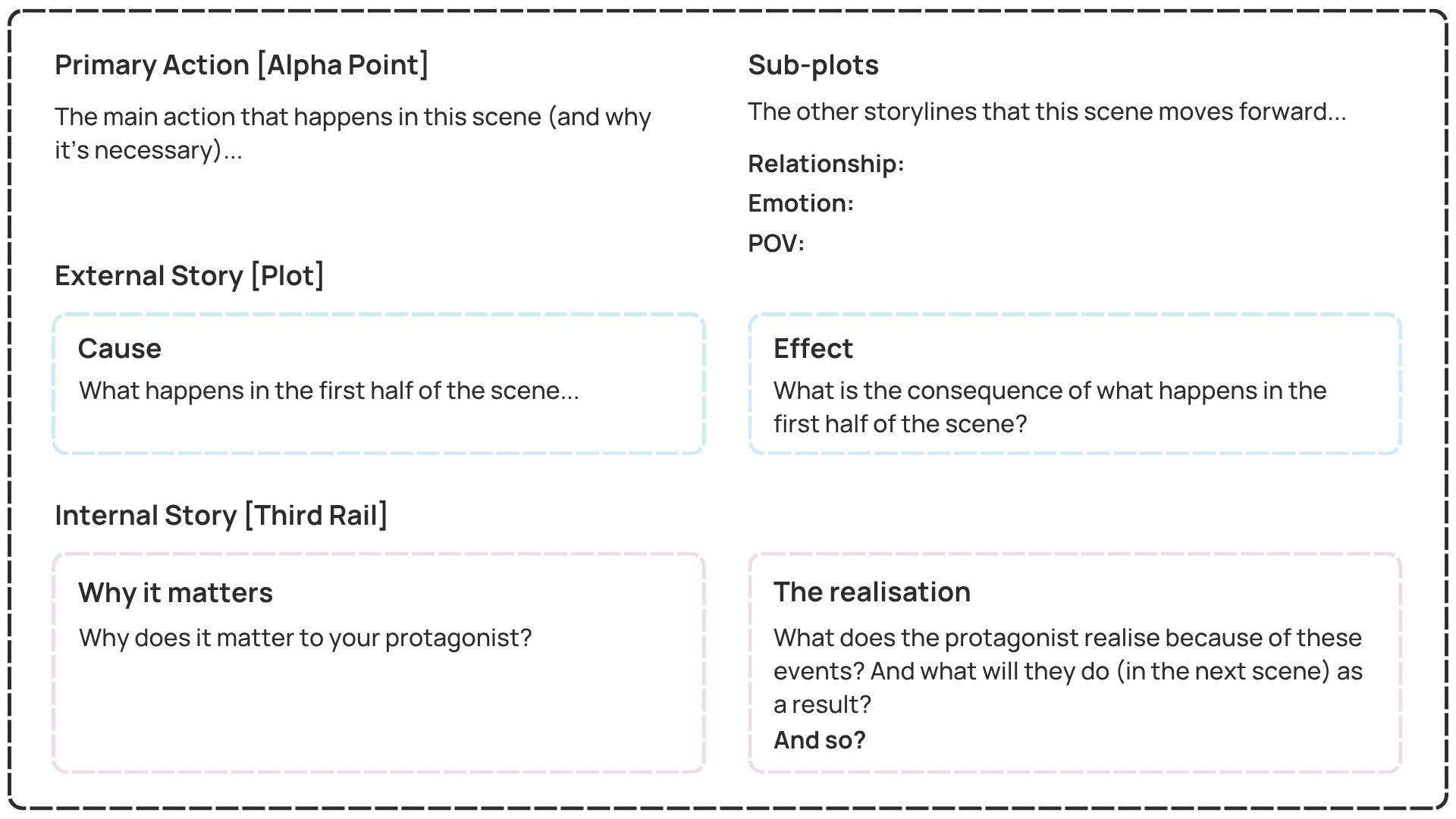
The other thing I’ve been doing, and I’m a little obsessed with it, is using the highlight feature to colour-code my scene openings on an existing draft.
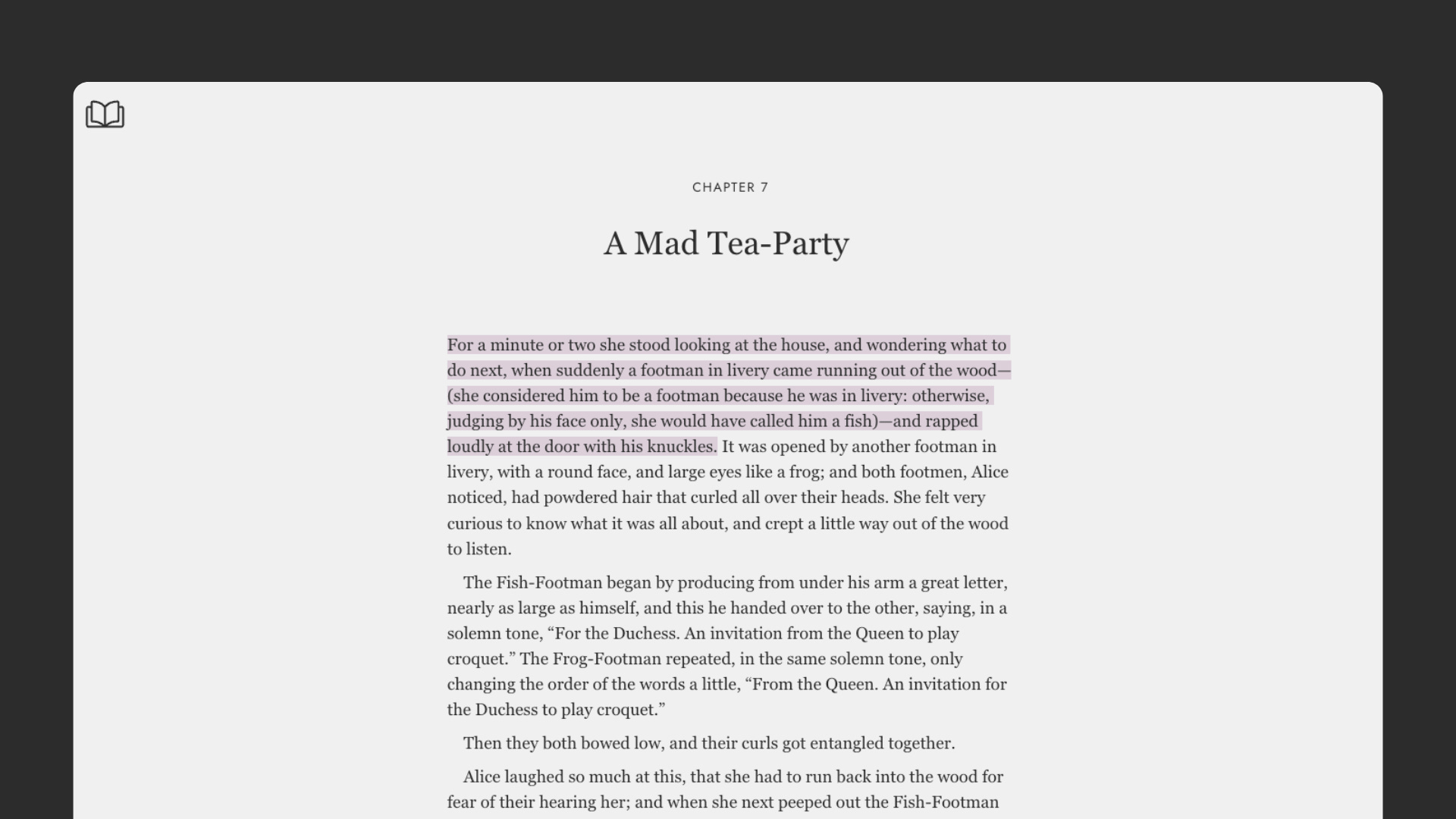
There are eleven highlight colours in First Draft Pro, which is conveniently more than enough to assign one colour per opening style, and I go through the manuscript tagging each opening as I read. The first time I did this, I noticed I had consecutive scenes starting with the same colour. Every scene opened on a sensory detail because that’s my comfort zone.